
While cost efficiency was once the prize everyone in the global supply chain market was chasing, recent chain of events have exposed its limits. Supply chains that prioritized cost-efficiency and put all their eggs in the same basket are now vulnerable. A recent report by S&P Global suggests that geopolitical conflicts have exposed weaknesses in global supply chains. Amid geopolitical landscape changes on the daily, business and governments are starting to prioritize supply chain sovereignty, designing sustainable networks around trusted partners and national security interests.
The Evolution Of Hyper Globalized Supply Chain
Even though hyper-globalization delivered efficiency gains, supply chains are changing how they operate fundamentally due to the underlying weaknesses. The risk associated with supply chain decisions are changing the way companies and governments think.
Trade Wars:
Tariffs and export controls have made previously reliable corridors volatile. Firms that were single-sourced are now adopting a “+1” approach. China, inarguably, is a very important region for Apple and one of its major manufacturing partners. Recent tariff changes have, however, led to Apple sharing concerns over its dependence on China.
Geopolitical Conflicts:
Geopolitical uncertainty and turmoil have led us to an era of unforeseen supply chain risks. Between the Russo-Ukraine war, rising cyberattack that critical infrastructure, and the most recent closure of the Hormuz and attacks around the Gulf trade routes have shown how quickly insurance premiums and freight rates rise.
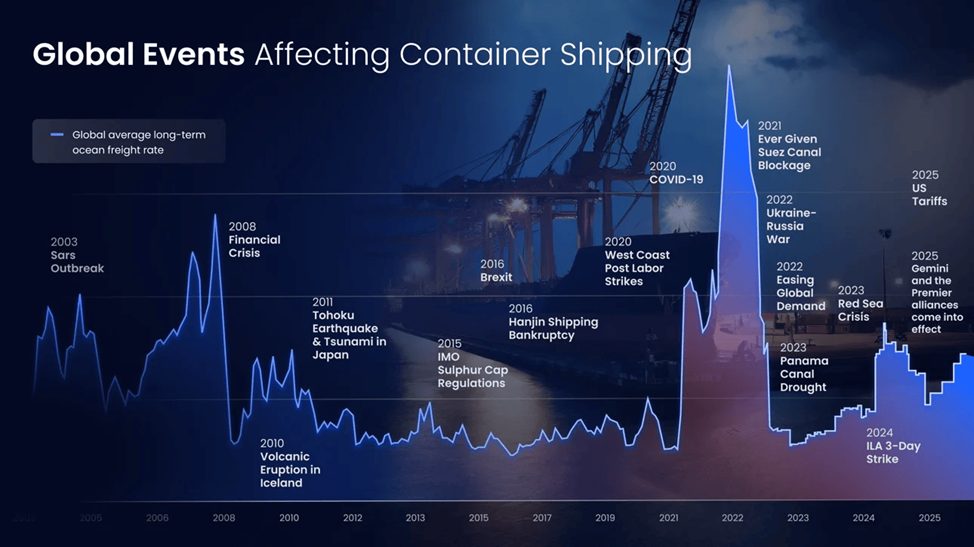
The Strait of Hormuz closure has unveiled how fragile global supply chain have become. Being one of the world’s most critical global shipment and energy chokepoints, the effects of any disruption ripple across Asia, Europe and beyond. The impact of the Hormuz closure extends beyond oil market. Energy crisis drives manufacturing costs and freight rates. This also exposes the single-source risk in gulf supply chains which has driven global oil prices.
Amid new risks and changing priorities, global supply chain and trade is going to see a new balance where resilience, and political alignments play into sourcing, pricing and logistics decisions.
What Is Supply Chain Sovereignty
Supply chain sovereignty means architecting your network such that critical flow remains continued and under control despite changes in geopolitics and policy making. It focuses on prioritizing reduced reliance on foreign suppliers by relocating critical manufacturing, technology and resources.
Components
Domestic Manufacturing and Reshoring:
Although easier said than done, bringing strategic steps closer to demand or within allied jurisdiction to maintain control over essential capabilities is the fundamental principle to build an independent network.
Friend shoring:
Building supplier ecosystems in politically aligned countries rather than going after the cheapest ones. As governments and firms have started to prefer lower political and operational risk, friend shoring is bound to soar.
Functional Lifecycle:
A sovereign supply chain relies on the five standard supply chain blocks but adapts them for security:
- Planning: Forecasting demand for critical infrastructure.
- Sourcing: Scrutinizing suppliers for reliability and political alignment for defense programs as it can be a serious national security issue.
- Manufacturing: Prioritising domestic and low-risk production over low-cost labour.
- Delivering: Securing logistics routing and warehousing in safe territories.
- Returning: Managing the end of life and safe disposal of sensitive technologies
How To Build A Sovereign Supply Chain
It is quite clear that cost and efficiency should no longer be the metrics for the operational excellence of a supply chain. Rather what needs to be focused on is supply chain independence and resilience.
The following options can be considered to set up better supply chain independence:
- Identify Your Criticality: Companies must first identify their most critical components, products and raw materials. This includes mapping which suppliers and logistic routes those components depend upon.
- Classify Risk Tiers: Once the critical components have been identified the next step is to perform a risk assessment. For each of your critical identified components, perform a vulnerability assessment keeping in mind the geopolitical situation. Reliance on a single source for any component should be flagged immediately.
- Diversify Your Supply Portfolio: Consider options for sourcing and see whether there are any closer or more reliable suppliers available. Review the service portfolio and identify any risks associated. Having alternative suppliers ensures continuity of operations in case of sanctions, trade restrictions or conflicts.
- Sourcing Policy Assessment: Organizations need to revise their sourcing policies. Procurement strategies should focus on reliability and long-term availability.
- Strategic Stocking: Based on your assessment, hold safe inventory for critical components. While it may increase costs temporarily, it protects against sudden disruptions in supply.
- Insurance Contract Design: Renegotiating insurance contracts is important to cover unforeseen geopolitical events.
In a period of unprecedented risks supply chains are no longer just functional components but strategic assets that can determine the survival of a business under pressure. Businesses can’t afford to cut costs for long term survivability. The companies that will succeed will be the ones with the most resilient and independent supply chains. Disruption is no longer an uncertainty. The question is how prepared you are to deal with it.